
Dealing with insomnia
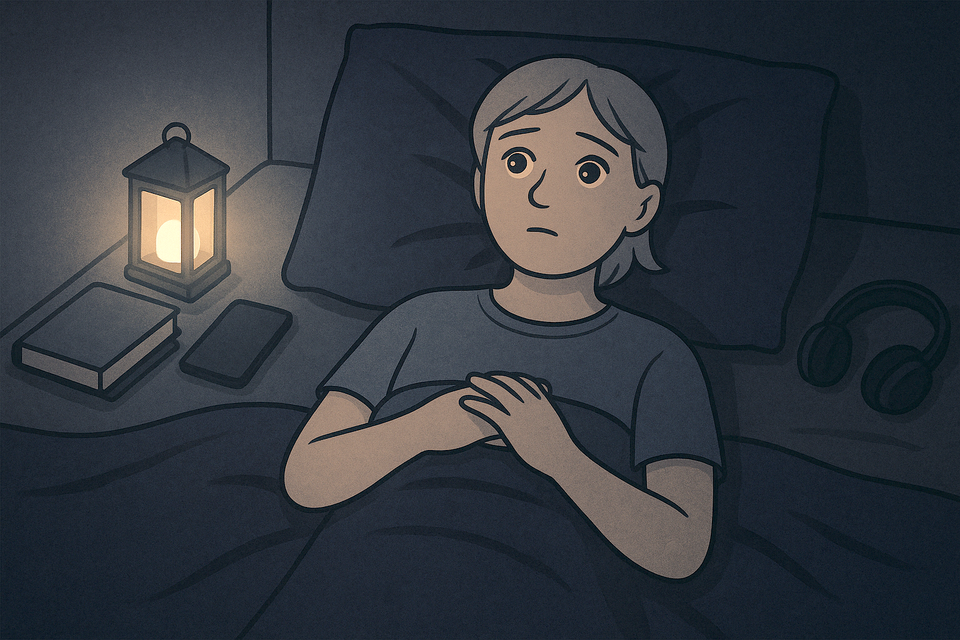
A lot of people with Long Covid or ME/CFS struggle with insomnia, sometimes severely. It was my case too. For almost a year, I could barely sleep a few hours a night, filled with vivid, agitated dreams. I would wake up every hour or so, sometimes in a full-blown panic attack.
Insomnia is also a particularly cruel symptom for a condition whose main feature is... exhaustion. 😞
In this post, I’ll first explain why generic "sleep hygiene" advice often doesn't work for us. Then I’ll share what has actually helped me improve my sleep over time.
Like everything with this illness, there's no quick fix for sleep. Sleep medication can be helpful occasionally, but they are not a long term solution. I did use them a few times, but never every day.
If you’re really struggling with sleep, please speak to your doctor. It’s useful to have a safe "emergency solution", something that gives you enough breathing room to start working on the deeper causes.
I- The usual sleep advice
When someone struggles with insomnia (without any specific medical cause), they’re usually given standard "sleep hygiene" advice or CBT-I (Cognitive Behavioral Therapy for Insomnia). You’ve probably received and tried at least some of them.
I remember watching a sleep hygiene video from a CFS coach and feeling desperate: "Do you really know what CFS is like? I am physically unable to do any of the things you’re saying are mandatory. I’m so screwed."
Don’t get me wrong. Sleep hygiene rules are generally good and helpful. They’re just not designed for people with Long Covid or ME/CFS, where insomnia often comes from a highly dysregulated nervous system. That’s why we can let go of the guilt and focus instead on what can actually help.
Let's review all of that together.
1- Usual tips that don't work for us
Especially for severe and bedbound people
These may become useful later in your recovery, but if you can't apply them right now, don't think twice about them. They're just irrelevant for you at the moment, and that's absolutely fine.
#1. The bed is only for sleep and sex.
I don't need to explain why this is absurd if you are bedbound. 😅 Even if you are not fully bedbound, you may still need to spend quite some time in bed during the day. If you feel able to spend some time on the couch or out of bed, that's great. Otherwise, forget about this advice. Don't force yourself.
#2. Getting up and going to sleep at the same time every day, even after a bad night, and avoiding naps.
This is way too strict for our conditions. Sleep is much needed for healing. If you are able to sleep a bit later in the morning or nap during the day, do it! Your body needs it.
#3. If you are awake for more than 20 minutes, get out of bed, do a calm activity and only return to bed when you feel sleepy.
Again, if you are severe or bedridden, getting out of bed repeatedly and doing more activity is often impossible. This will just put your nervous system into more stress, which is the last thing we need. Staying in bed and trying calming practices is often the best bet. More detail in the next part of this post.
#4. Getting sunlight as soon as you wake up (10-30 minutes)
If you are able to do it, then great! Sunlight has a lot of benefits. If you can't go outside, you can consider a light therapy lamp, or just looking out the window.
But if you are very light sensitive (like I was for a long time), simply let this go for now. Again, forcing something that is clearly out of your current window of tolerance will not help.
2- Usual tips that are still helpful
Low-energy safety signals
These don’t require any energy. They're simply about reducing stimulation and sending your body signals of safety. You've probably heard them all before, but here's a really quick recap.
- Keep lighting low and soft in the evening.
- Reduce screen time before sleep and use blue light filters.
- Keep your room cool, quiet, and dark (an eye mask can really help).
- Avoid checking the time if you wake up during the night.
- Avoid caffeine, alcohol, and nicotine.
- Have a light dinner, not too late in the evening.
The second part of this post will go deeper into practices that help improve sleep with a nervous system that is stuck on "alert mode": working on your perception of sleep and creating a sense of safety around it.
II- What you really need to restore sleep: safety
I know firsthand how insomnia can make you feel desperate, guilty, and scared. When your body doesn’t sleep, it feels like it will never heal. And often, doctors and family don't hesitate to give you tips you already heard 100 times, and criticize your sleep habits...
If sleep doesn't come, it's not your fault. It's because your nervous system doesn't feel safe enough to let go. Like a cat whose eyes are closed, but whose ears twitch at the slightest sound.
Here are a few ways to create more safety around sleep. The goal is to gently signal to your brain that it’s safe to activate the rest-and-repair mode.
#1. Allowing the absence of sleep
Accept that, for now, you're awake. You're resting your body and mind, lying in bed, as cozy as possible. And if it's the only available thing for now, that's okay. If you wake up in the middle of the night, simply notice it without judgment.
The more you fight or stress about not sleeping, the less your nervous system feels safe enough to let sleep happen, and that's where the vicious cycle begins.
My mantra about sleep is:
"If I sleep, great. If I don't sleep, that’s okay. I'm resting and it's good enough."
#2. Letting go of rigid thinking about sleep
I know how insomnia brings thoughts like:
"I absolutely need to sleep eight hours tonight, or tomorrow will be horrible."
"It’s already 2 a.m. and I’m still awake... I’m doomed."
"I don’t even want to go to bed, I’ll just have another sleepless night."
These thoughts are completely understandable, but they also send danger signals to your nervous system. You can let them go. Your body knows what to do, and it doesn’t need you thinking about sleep.
#3. Relax the mind and body
- Mind dump. Write down on paper or on your phone everything you need to remember or anything that worries you. Empty your mind as much as you can before bed.
- Bedtime routine. Create a routine that feels pleasant and safe. You can try slow breathing (4-6 or 4-7-8 patterns), gentle muscle relaxation, a guided sleep meditation, or yoga nidra... Here's my favorite sleep meditation at the moment.
#4. Reassuring objects
I bought a weighted blanket. It brings a lot of comfort, like being gently held. Having a bit of weight on the body is naturally soothing for the nervous system. It's not a miracle of course, but it's a cozy little bonus. I still sleep with it to this day.
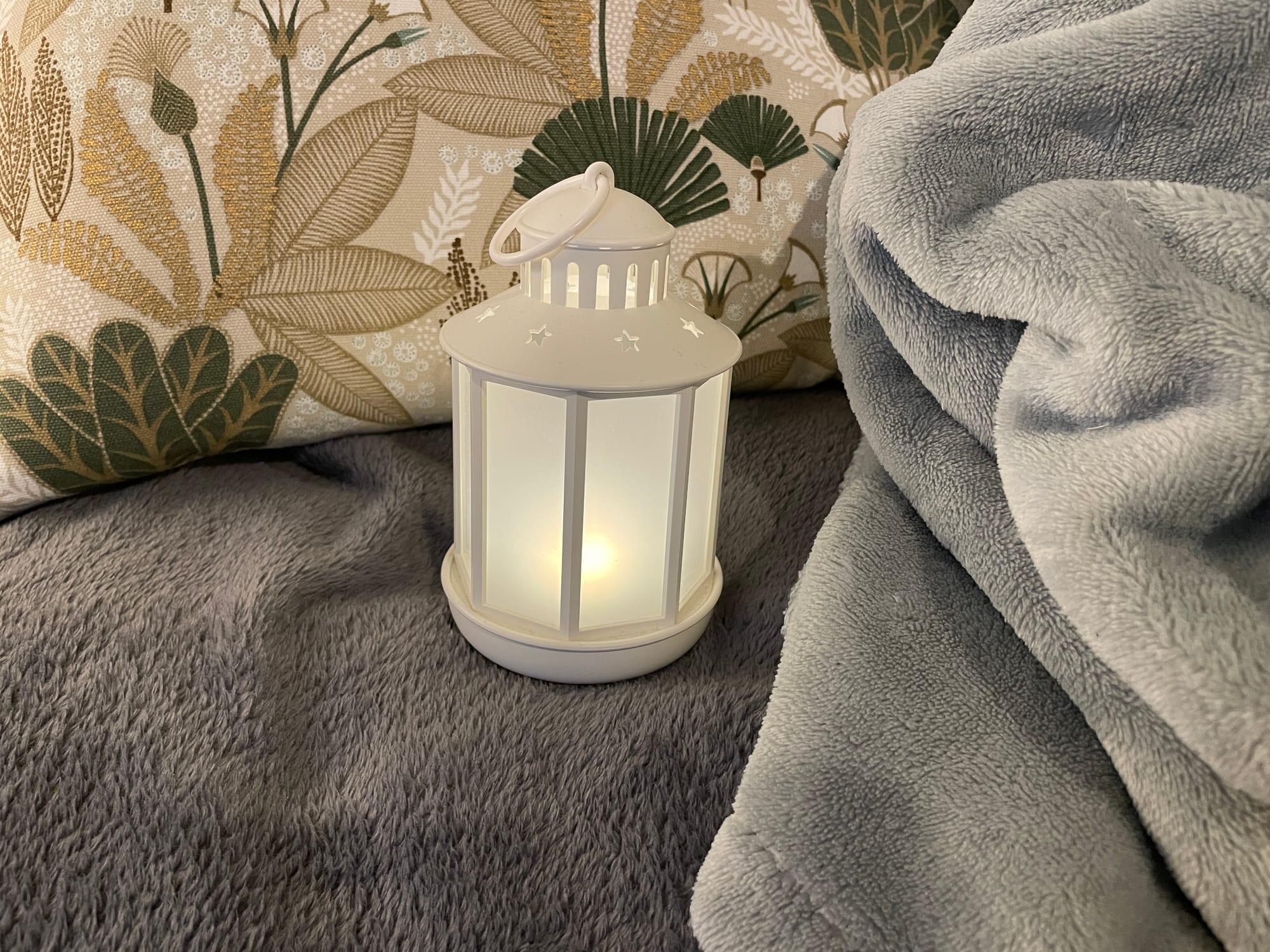
I also keep a small Ikea LED lantern that I turn on whenever I feel anxious at night. It acts as a gentle anchor for safety.
Conclusion
With all these techniques and reframing, my sleep improved a lot. I still have occasional bad nights, especially during phases of activity expansion, and that's perfectly normal. It is pretty common in our recovery journeys, and there's no need to worry about them.
Remember, you can’t force sleep, and improving it takes time.
Sleep happens when your nervous system feels safe enough to let go.
In the meantime, let go of the guilt and anxiety about sleep. Find some comforting podcasts, soft music, or guided meditations to keep you company during the night.
Member discussion