
Getting better: the signs of recovery

How do I know if I'm getting better?
I asked myself this question a thousand times along the way, especially when I was experiencing setbacks and symptoms after expanding activity a little bit.
"Am I going in the right direction?"
"How do I know that I'm improving and not going backwards?"
Before talking about signs of improvement, it’s important to remember that recovery is not a linear process, and that for most of us, it's a long journey. Yes, there are "miraculous two-week recoveries" out there, and that's wonderful. But they are definitely the exception.
In this post, I'll share all the signs of improvement I noticed in myself, and hopefully some of them will resonate with you!
I- Capacity improvement
Of course, having more capacity is the main sign of improvement. But often, we don't consider all the aspects of it.
Your overall capacity is made up of three buckets:
- Physical capacity (the most obvious one): getting up, standing, personal hygiene, walking, moving around the house, driving...
- Cognitive capacity: reading, watching or listening to content, focusing on a task, talking to people, socializing, handling light and sound…
- Emotional capacity: the ability to handle stress or unexpected events, welcome your emotions, have difficult conversations, assert yourself, set healthy boundaries…
These three buckets usually don’t improve at the same time, but rather in phases. Here's how it unfolded for me:
🧠 My cognitive capacity improved first (while my physical capacity remained stuck for many months).
The first signs of improvement were:
- I could look at my phone screen for longer (first 30 minutes a day, then 1 hour, then 2 hours…)
- I could talk to my loved ones for longer
- I kept my window blinds open with natural light most of the day
- Noise wasn't hurting my brain as much
I was still in bed, but much less bored. 😅
💛 My emotional capacity also improved quietly.
We often forget to include this one, but for me, emotional stressors were the hardest to handle. Being more regulated during stressful moments or small conflicts was an amazing sign that my nervous system resilience was improving.
🏃♀️ My physical capacity improved last.
Getting out of the bedbound state was probably the most difficult part, because the body needs time to re-habituate itself to being upright and moving. I had to be extremely gradual and gentle with myself.
My first sign in this direction was subtle: I could make my bed every day and stay on top of the bed during the day, instead of under the blankets. That small change created a clear separation between "daytime" and "nighttime", which helped improve my sleep.
I also remember the day I realized it was easier to shower standing up instead of using my shower stool. Yay!
II- Doing something new
What truly matters is the moment you do something new for the first time in a while. And it doesn’t matter if you can’t repeat the activity the next day.
When I went upstairs in my own house for the first time after 1.5 years, I couldn’t do it again for a few weeks. Later, I tried again, it was a bit easier. Then I managed to do it twice a week. Now I can go upstairs whenever I want, without even thinking about it. It was a gradual process.
Even if you increase activity very slowly, you may notice a slight rise in symptoms afterwards. That doesn’t mean you did too much or that you failed. It simply means your brain is integrating this new activity into your baseline.
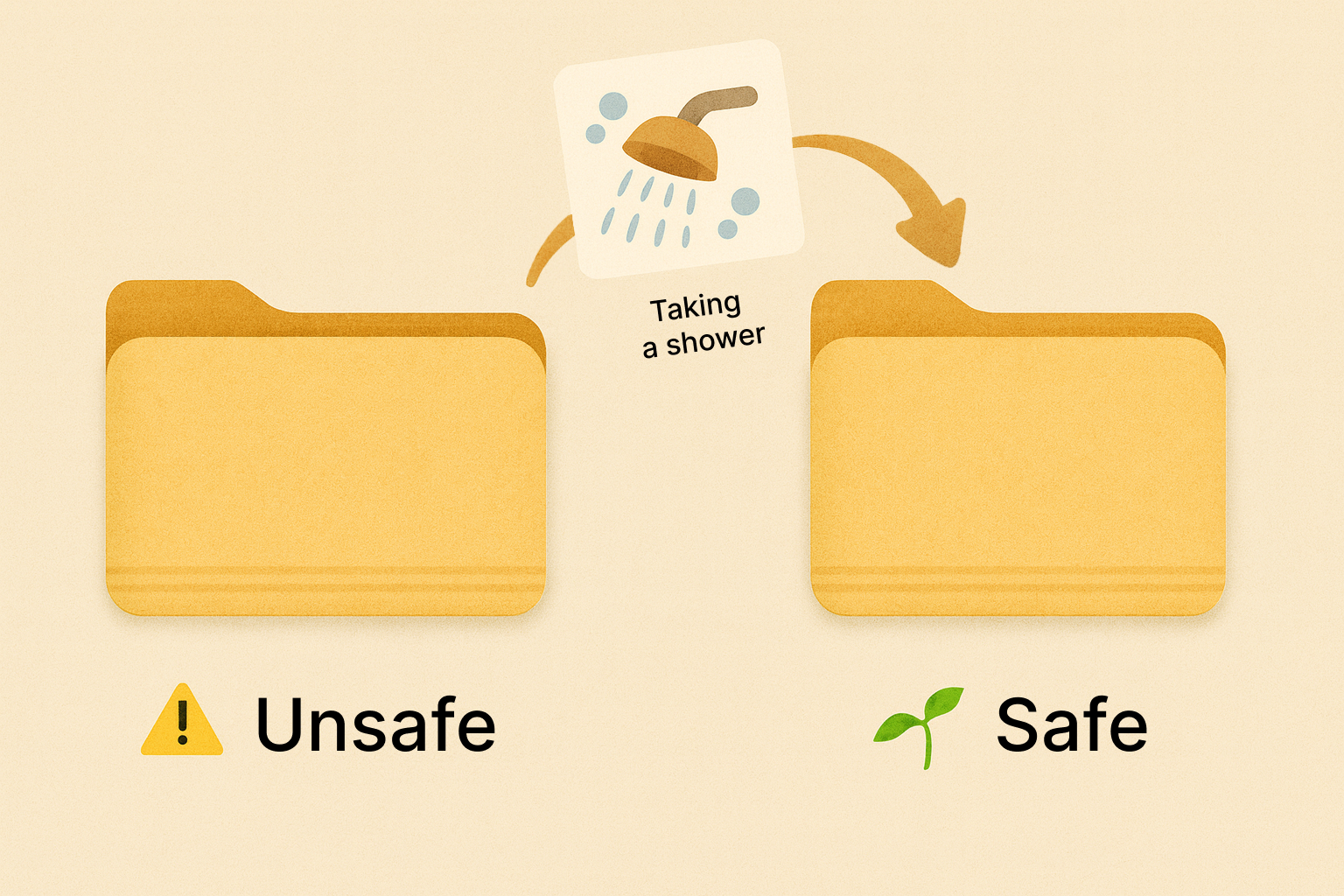
It's the brain slowly relearning, moving each activity from the "unsafe" folder to the "safe" folder in your system.
III- Your state during an activity
Feeling like you can do something without fear, without anticipating disaster, or even without thinking twice, is a great sign that this activity is becoming automatic and safe again for your brain.
Being able to do activities with mindful awareness and enjoyment is also a great sign.
If symptoms or a feeling of uncertainty appear during the activity, try a quick regulation practice: pause, place your hand on your chest, take a deep breath, and remind yourself that you are safe here and now.
If that’s not enough, it may be a gentle cue to stop the activity for now, and that's absolutely fine. In my experience, it's important not to push through when you feel really dysregulated. You will try again later!
IV- Discreet body signs of regulation
Here are a few examples of subtle signs that your body and nervous system are regulating. It can be helpful to observe your body and notice when these appear:
- Yawning
- A spontaneous deep breath or sigh
- More saliva in your mouth
- Tears in your eyes
- Stomach gurgling
- Change in muscle tension (body relaxing, shoulders dropping, softer face…)
- Clearer eyesight, less tunnel vision
- A sense of warmth in the body
- Change in hunger
- Change in bathroom needs
- Thoughts slowing down (in a good way!)
There are many more, but these are the ones I noticed in myself!
🌿 The mysterious waves of gratitude
On my healing path, I experienced a couple of times a very brief but powerful "wave of gratitude". It felt like the most amazing thing ever. A warm rush in my body, happy tears, and an overwhelming sense of gratitude for life, nature, and my own resilience.
I read about this phenomenom in the book "Recover" by Sally Riggs. I didn't really believe it was a thing... until I experienced it myself!
There's nothing to do to trigger them. It's totally fine if you never experience them. They may just appear and disappear, as a little gift from life and recovery.
V- Celebrate all your successes
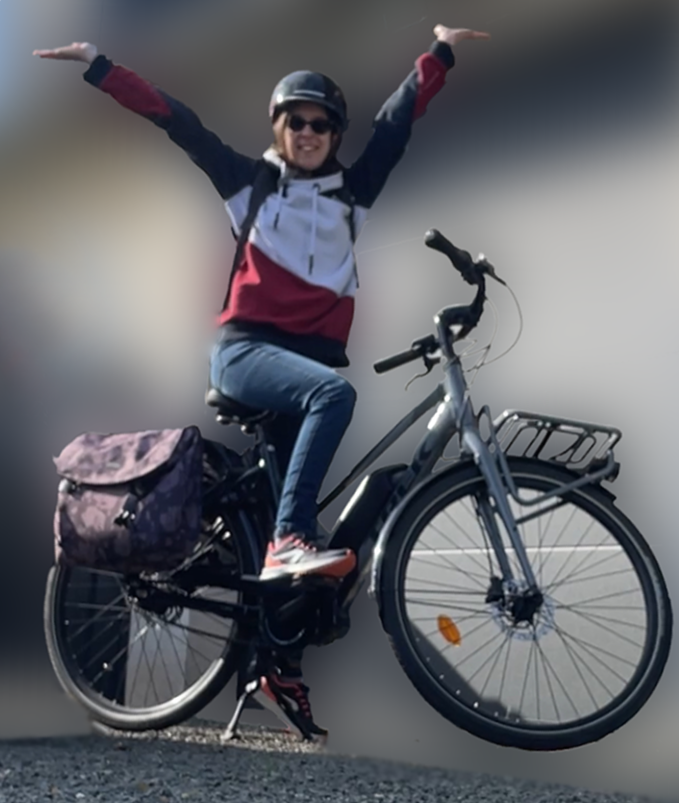
One thing that helped me a lot was celebrating all my victories, especially the tiny ones at the beginning when I was bedbound. I would congratulate myself out loud every time I did something new. When my capacity expanded, I added a little victory pose or dance.
"Yay, I did it! I CAN do this! I am healing! 😃"
Be your own cheerleader. Use your words, your body posture, your smile. All of it actively signals to your brain that you are healing and safe. Your brain is always listening, and this is truly part of the process.
Conclusion
I personally don’t recommend tracking your progress too closely (with daily checks on apps or spreadsheets), as it contributes to hypervigilance. In the beginning, I occasionally looked at my screen time or step count, but only for general information.
The Functional Capacity Questionnaire (FUNCAP) was designed to assess capacity in people with ME/CFS. It can be a helpful tool to check in with your current state from time to time, or to share with your doctor.
Your capacity will fluctuate a lot. Don’t worry if nothing seems to change day to day or even week to week. Many times, I felt like I was plateauing or even going backwards. But what truly matters is the overall trend over one or two months.
Healing is rarely obvious while it's happening, but your body is constantly working behind the scenes. Trust yourself, and trust the process.
The second part of this post is right here:
Getting better: What activity expansion looks like
You may also like to read an update about what recovery felt like for me in later stages.
Comments