
My regulation toolbox (after 3 years of experimenting)

In this post, I share my current regulation toolbox. It is the result of almost 3 years of research and personal experimentation with mind body approaches.
They contributed to my recovery journey from Long Covid, ME/CFS, and chronic anxiety. They also turned out to be an amazing skillset to live a healthier life (and support my autistic self).
Important note: My toolbox is not "the right" toolbox. We all need different things to feel safe, and I encourage you to create your own!
Part 1: My regulation core principles
What it actually means
In the mind body space, I often heard recovered people saying:
"Healing doesn't have a finish line."
"It is a lifelong journey."
"You have to keep regulating your nervous system."
When I was in the thick of it, these statements discouraged me SO MUCH.
I thought they meant I had to accept a limited life and commit to three hours of meditation every day just to keep my symptoms at bay. To me, that was not recovery. But as I'm slowly returning to a normal life, I understand that it's not what this is about. (Note: even if I understand their point better, I still find these statements very tactless!)
So what it means for me now is: Being healthy in the long run is about living with core principles that naturally promote a regulated and resilient nervous system.
At first, putting these principles into practice takes conscious effort. But over time, they end up becoming new habits, and a solid foundation for navigating future challenges. They don't need to be applied perfectly, just consistently enough to signal durable safety in the brain and body.
My own core principles list
- Knowing that whatever is there, it's okay, and I can handle it. If my nervous system is dysregulated right now for whatever reason, it's fine. It's a temporary state, and it's not dangerous.
- Choosing a new reaction to symptoms. If some symptoms are there, I know there's no need to panic or to "fix" them. I just observe them, and I know they'll pass. Over time, they are less and less present.
- Allowing difficult emotions. I welcome sadness, anger, fear, despair and frustration. They have the right to be here. Emotions are messages from the body, sometimes pointing to an unmet need. I can feel them in my body, without getting caught in the story (= all the thoughts about the emotion). I can act on them later, if needed.
- Challenging unhealthy patterns. I try to notice when my unhelpful patterns are running the show: anxiety, catastrophizing, people pleasing, inability to say no, self-criticism, high pressure, pushing through... I now know that my brain doesn't always tell the truth, and that I can make different decisions.
- Reconnecting with life. I'm trying my best to be in the present moment, seeking joy in small things, and noticing progress. This takes me out of my head, and it has become more natural over time.
- There is never too much self-compassion and self-care. Being kinder to myself through each moment, eating nourishing food, sleeping as much as I need, and being in nature when I can... all goes a looooooong way.
Part 2: My practical tools for challenging times
General tools
When feeling overwhelmed:
- Isolating myself in a room that feels safe (my bedroom)
- Telling people that I need to be alone for a moment
- Reducing sensory input:
- Dim lighting
- Away from strong smells
- Quiet (noise cancelling headphones), or soft music if it feels supportive
Physical tools
Meeting basic needs
- Showering / changing clothes if I can (helps me reduce sensory overwhelm)
- Eating a snack
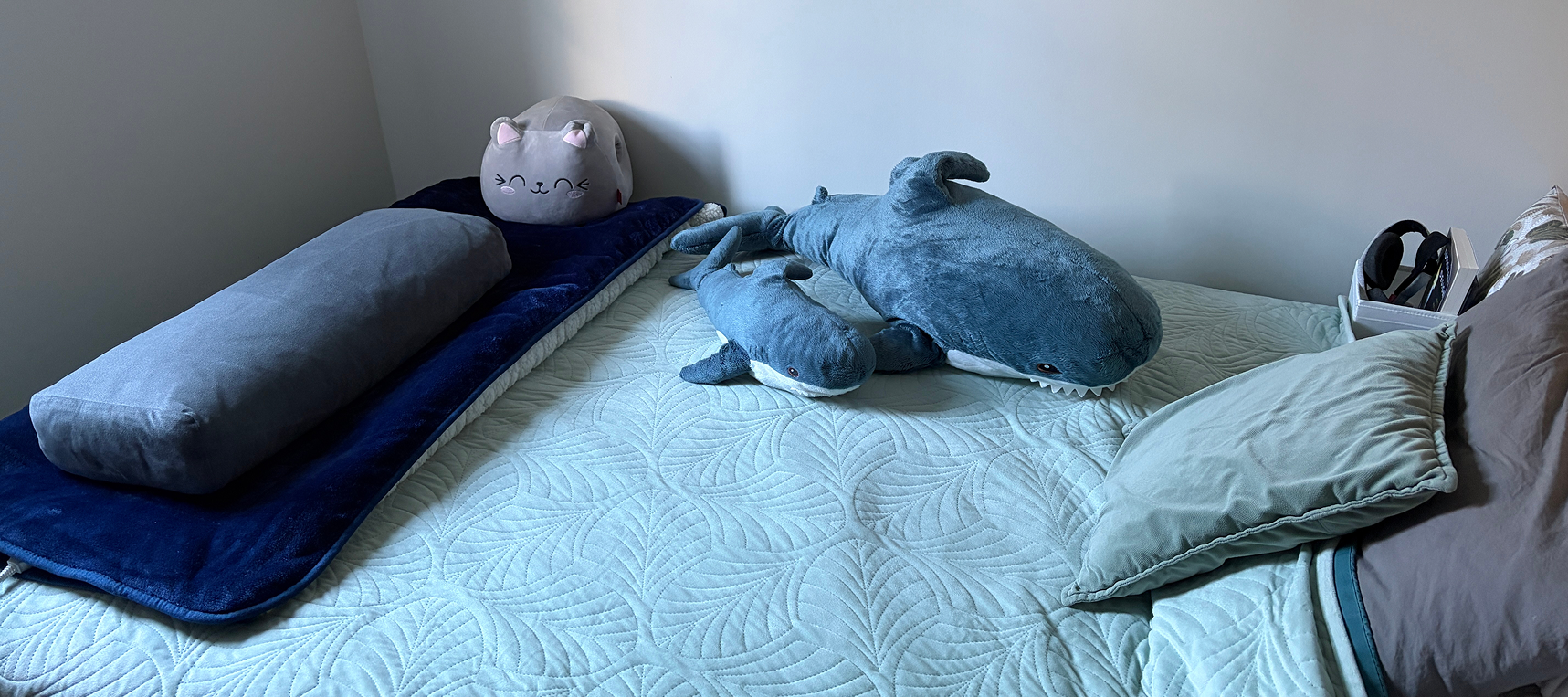
- Actually resting (without screens, and with any useful props: cushions, plushies, eye mask, weighed blankets...)
Somatic tracking (with curiosity and playfulness)
- Somatic tracking about symptoms or sensations, if they are not too intense (audio guided practice)
- Somatic tracking about any emotion that is present (audio guided practice)
Breath work
- Simply feeling my belly rise and fall, allowing the natural breath to be as it is
- Let out a big sigh!
- Counting my breaths (inhale, 1... exhale, 2...)
- Smiling while breathing
- 4-6 breathing
- Exhaling as if breathing through a straw
- Lion's breath (deep inhale, exhale with the tongue out)
Soothing touch & movement
- Massaging my hands
- Placing one or two hands on my chest and closing my eyes
- Gently stroking my arms, belly, or thighs
- Rocking
- Letting my body twitch or move freely (may require more energy)
- In the car: Opening the window and focusing on the wind on my skin
If capacity allows
- Walking outside every day, being in nature
- Dancing & singing with music I love
- Yoga or stretching
Cognitive tools
- Interrupting. Noticing unhelpful thoughts and choose not to engage with them
- Distracting myself. Watch something funny, read, scroll for a while.
- Human connection. Talk to someone I feel safe with about how I'm feeling or what I'm going through at the moment.
- Setting clear boundaries. Communicate my needs and stand up for myself.
- Therapy (with a good therapist!).
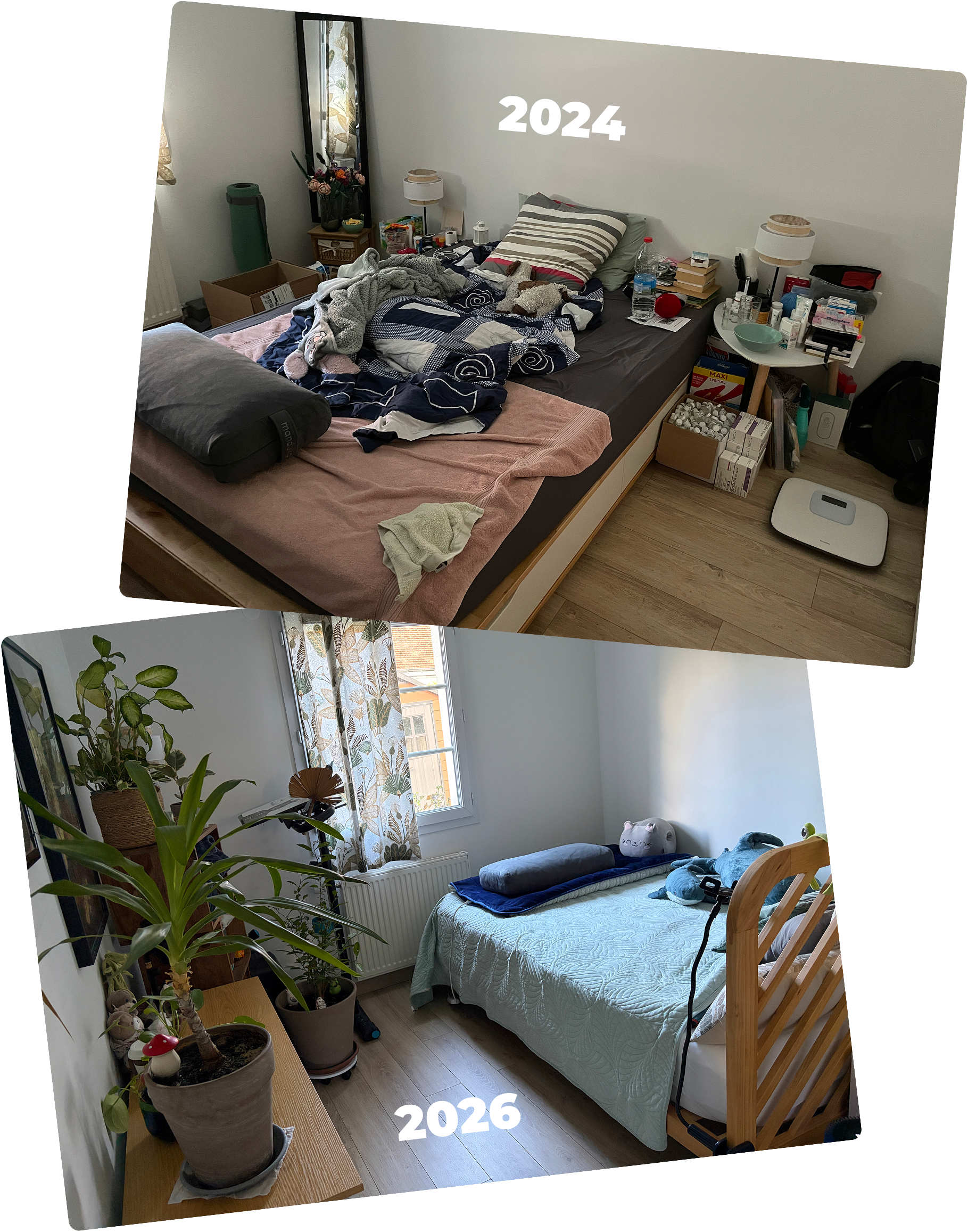
- Changing my environment. When I felt ready and in small steps, I changed and rearranged furniture and decoration. I found this especially helpful to deal with trauma. Changing my environment always sends a strong signal to my brain ("the difficult time we went through here is over"), and taps into my creativity (finding a new arrangement that works in a small room is not always easy 😅)!
I don't use all of these tools every day! When I feel the need to regulate, I pick one or two things that feel accessible and enjoyable in the moment. Identifying my nervous system's state to guide my choice is also very useful: learn more about this here.
Part 3: Some tips to build your own toolbox
1- Identify what supports you
Make a list of all the things that make you feel safe in life in general. Then, look for any small, accessible action that moves you in that direction, even a little bit. It doesn't have to be perfect!
2- Experiment for yourself
Try things that feel manageable, and see how you feel. Your intuition can be a great guide to determine if a practice is helpful for your nervous system or not. If a "popular" practice doesn't feel right for you, don't force it.
For example, I personally had no success with brain retraining rounds at any point in my journey. Yet this technique is widely promoted in almost all recovery programs. I just found other tools that worked better for me.
3- Small shifts count
Keep in mind that even a 1% shift towards feeling safer is valuable. Each tiny action has a cumulative effect over time.
4- Keep your toolbox accessible
Write down the list of things you found helpful on your phone, on a piece of paper... Don't just keep it in your head!
When we're overwhelmed or feeling very dysregulated, it's much harder to remember what might help and find the energy to choose a tool. Having a list to refer to was really helpful for me.
If you want more inspiration for practical regulation tools, I can recommend:
- the Nervous System Regulation Toolkit (free)
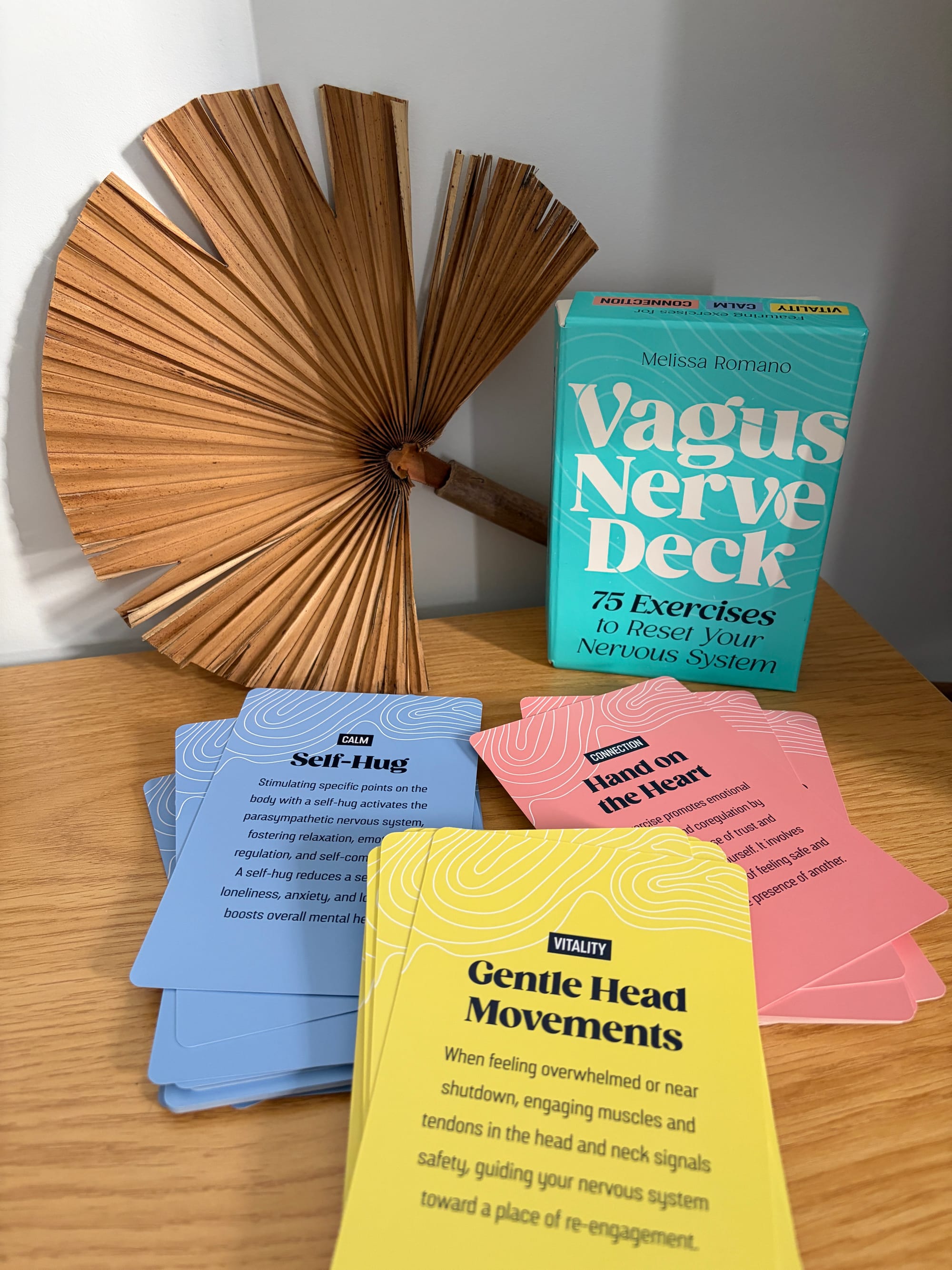
- the Vagus Nerve Deck (a lovely deck of physical cards, shown below)
I hope you found this post inspiring! Feel free to share your own tools in the comments. :)
Comments